1. What is Trading?
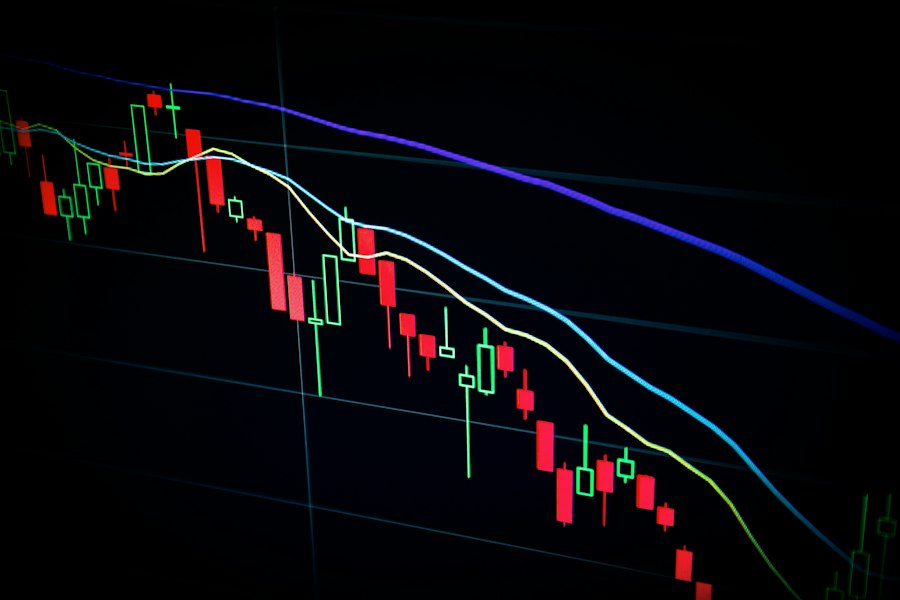
At its most fundamental, trading is the act of buying and selling financial assets. These assets can include shares in companies, government bonds, currencies, commodities like oil or gold, or more complex instruments. Trading occurs on organised exchanges or directly between parties in over-the-counter (OTC) markets.
Trading is distinct from investing, though the two terms are often confused. Investors typically take a long-term view — buying assets with the expectation that they will increase in value over months or years. Traders, by contrast, typically operate over shorter timeframes, seeking to benefit from price movements that occur over days, hours, or even minutes.
Neither approach is inherently superior. Both carry risk, require knowledge, and demand careful thought. The purpose of this lesson is not to advocate for either — it is to help you understand how both work from an educational standpoint.
This lesson is designed purely for educational purposes. Nothing in this course should be interpreted as encouragement to trade, invest, or take any specific financial action. All financial activity carries risk, and you should always seek independent qualified advice before making any financial decisions.
2. How Markets Work
A financial market is any organised system or mechanism through which buyers and sellers interact to exchange financial instruments. The most visible examples are stock exchanges — like the New York Stock Exchange (NYSE), London Stock Exchange (LSE), or Euronext Dublin, which is Ireland's own stock exchange.
Markets serve several critical functions in the economy:
- Price discovery: Markets aggregate the information held by millions of participants to establish a fair price for any asset at any given moment.
- Liquidity provision: By connecting buyers and sellers, markets ensure that assets can be bought and sold relatively quickly without dramatically affecting price.
- Capital allocation: Markets channel money from those who have it to companies, governments, and projects that can use it productively.
- Risk transfer: Financial instruments allow risk to be transferred from those who can't bear it to those who are willing and able to accept it in exchange for potential reward.
3. Types of Financial Markets
The term "financial markets" encompasses several distinct categories, each with its own characteristics, participants, and instruments:
- Equity markets (stock markets): Where shares of publicly listed companies are bought and sold. Euronext Dublin lists many Irish companies including AIB, Bank of Ireland, and CRH.
- Bond markets (debt markets): Where government and corporate debt instruments are traded. Ireland's government issues bonds that are bought by institutional investors globally.
- Foreign exchange (Forex) markets: The world's largest market by daily volume, where currencies are exchanged. As Ireland uses the euro, currency movements affect the economy significantly.
- Commodity markets: Where raw materials such as oil, natural gas, agricultural products, and metals are traded.
- Derivatives markets: Where complex instruments whose value is derived from underlying assets (like shares or commodities) are traded. These are significantly more complex and carry higher risk.
4. Key Market Participants
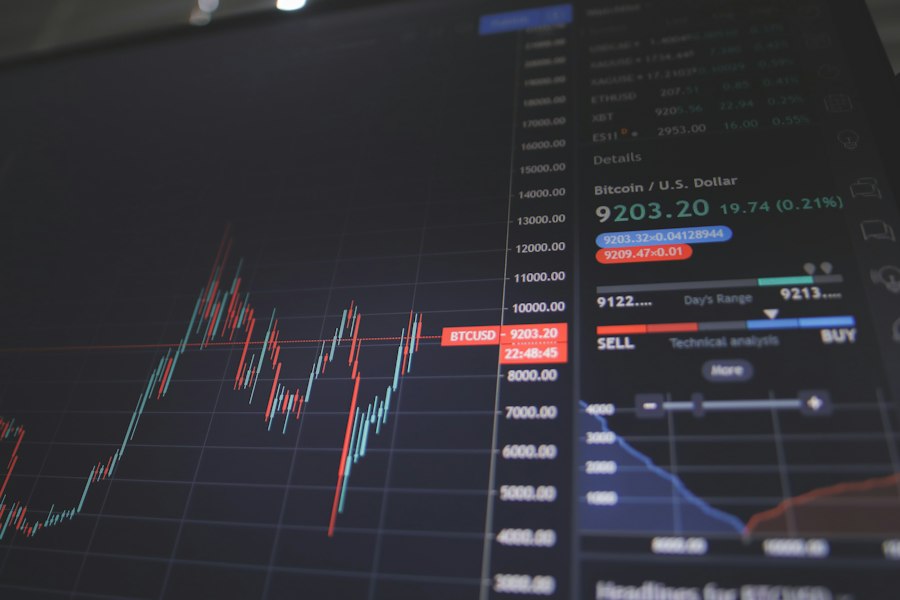
Understanding who participates in financial markets — and why — helps explain how prices move and why markets behave the way they do.
- Retail investors and traders: Individual members of the public who buy and sell assets, typically through online brokers. They represent a significant portion of trading volume in modern markets.
- Institutional investors: Large organisations such as pension funds, insurance companies, and investment funds. In Ireland, many global institutional investors are domiciled due to the favourable fund management regulatory environment.
- Market makers: Financial firms that quote both buy and sell prices for assets, providing liquidity to markets and earning a profit from the difference (the "spread").
- Central banks: The European Central Bank (ECB), which governs monetary policy for the eurozone including Ireland, participates in financial markets through open market operations.
- Brokers: Intermediaries who facilitate trades between buyers and sellers, earning commissions or fees in return.
5. How Prices Move
At the most basic level, asset prices move based on the balance of supply and demand. When more people want to buy an asset than sell it, the price rises. When sellers outnumber buyers, the price falls. But what drives those decisions?
Several factors influence price movement:
- Economic data: Reports on GDP growth, inflation (CPI), employment, and retail sales all affect market sentiment and prices.
- Company performance: For equities, quarterly earnings reports, revenue guidance, and strategic announcements move individual stock prices significantly.
- Interest rate decisions: The ECB's decisions on interest rates have profound effects across all asset classes in the eurozone.
- Geopolitical events: Wars, elections, trade disputes, and diplomatic developments can cause sudden market movements.
- Market sentiment: The collective emotional state of market participants — often categorised as "risk-on" or "risk-off" — plays a significant role in short-term price movements.
Price movements in financial markets are fundamentally unpredictable in the short term. No analytical method, tool, or indicator can reliably predict future prices. Anyone claiming otherwise is either misinformed or misleading you.
6. Orders and Trade Execution
When a trader or investor decides to buy or sell an asset, they communicate that intention to the market through an order. Understanding the different types of orders is fundamental to understanding how trading works in practice:
- Market order: An instruction to buy or sell immediately at the best available current price. Ensures execution but not a specific price.
- Limit order: An instruction to buy or sell only at a specified price or better. Gives control over price but doesn't guarantee execution.
- Stop order (stop-loss): An instruction to buy or sell once the price reaches a specific level, often used to limit potential losses.
- Stop-limit order: A combination — converts to a limit order once the stop price is reached.
7. Key Terminology
Essential Trading Vocabulary
8. The Role of Brokers
Individual retail participants typically cannot access financial exchanges directly. Instead, they interact with markets through a broker — a regulated intermediary authorised to execute trades on their behalf.
In Ireland and across the EU, retail brokers must be authorised by a national competent authority. Irish-authorised firms are regulated by the Central Bank of Ireland (CBI). Firms based elsewhere in the EU may passport their services into Ireland under MiFID II rules. Before using any broker, it is essential to verify their regulatory status.
You can check whether a firm is authorised by searching the Central Bank of Ireland's online register at centralbank.ie/regulation/registers. Always verify before providing any personal or financial information to a trading platform.
9. Regulation in Ireland
Financial markets in Ireland are overseen by the Central Bank of Ireland, which is responsible for both monetary policy and financial regulation. The CBI operates within a broader European regulatory framework that includes:
- MiFID II (Markets in Financial Instruments Directive): The EU framework governing financial services, investor protection, and market transparency.
- ESMA (European Securities and Markets Authority): The EU-level supervisory authority that coordinates national regulators and issues guidance and warnings about high-risk products and firms.
- GDPR: While not specific to financial services, GDPR governs how firms in Ireland handle your personal data.
Understanding the regulatory landscape is important because it defines what protections you have as a consumer, what obligations firms have towards you, and where to turn if something goes wrong.
10. Summary & Next Steps
In this lesson, you've been introduced to the foundational concepts of financial markets and trading. You now understand:
- The definition of trading and how it differs from long-term investing
- How financial markets function and why they exist
- The main types of markets and what instruments they contain
- Who participates in markets and what roles they play
- The factors that drive price movements
- The different types of orders used to enter and exit positions
- Key terminology that forms the language of financial markets
- The role of brokers and the importance of regulation in Ireland
You've completed Lesson 1. In Lesson 2, we move on to Technical Analysis — understanding how to read price charts, identify common patterns, and use technical indicators as analytical tools. Remember: charts describe what has happened. They do not predict what will happen next.